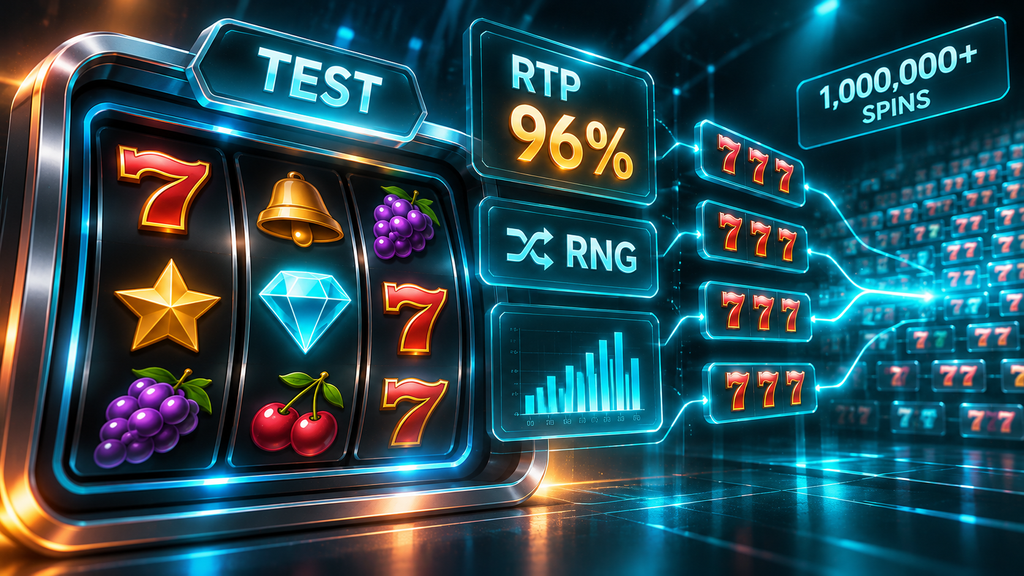
Every pokie that appears in an Australian online casino lobby has passed through a certification process before it was made available. The process involves independent testing laboratories, regulatory submissions and mathematical verification of the game’s certified RTP and volatility profile. The games carry verified behaviour, not just a marketing description. For Australian players deciding where to play, Bao Casino bonuses compared shows how the bonus structure interacts with the library of certified titles on offer.
Who Tests Pokie Games
Independent testing laboratories handle the certification process on behalf of regulatory bodies, keeping it at arm’s length from the studios whose titles are being assessed. The major laboratories operating in this space are eCOGRA, iTech Labs, BMM Testlabs, NMi and Gaming Laboratories International (GLI).
Each laboratory is accredited by the regulators whose markets the studio wants to access. MGA markets require MGA-accredited certification. Curacao-licensed casinos go through Curacao-approved testing. The accreditation chain ensures the testing laboratory is answerable to the regulator, not to the studio paying for the certification.
What Gets Tested
The testing process covers several layers of a game’s behaviour, each addressing a different aspect of how the title performs.
Mathematical model verification. The laboratory reviews the game’s underlying mathematics: symbol weights, reel configurations, bonus trigger probabilities and payout distributions. The certified RTP figure comes from this review. The lab runs simulations across billions of spin outcomes to verify that the game’s actual payout percentage matches the studio’s submitted mathematical model.
Random number generator audit. The RNG driving each spin is tested for statistical randomness. A predictable or biased RNG would allow players or operators to gain an advantage by anticipating outcomes. The audit confirms the RNG produces outcomes that are genuinely independent from spin to spin.
Game logic verification. Every rule in the paytable is tested against the game code. If the paytable says a five-of-a-kind symbol combination pays 500x the stake, the laboratory confirms the code produces that outcome under those conditions. Discrepancies between the paytable and the code are flagged before certification is issued.
Bonus feature testing. Bonus rounds, free spins, multipliers and special symbol behaviour are all tested separately. The laboratory confirms that each feature activates under the conditions the paytable describes and pays according to the stated rules.
Interface and display testing. The game’s display of spin results, win amounts and balance changes must match the underlying outcomes at all times. A win of $15.40 displayed as $15.40 is a basic requirement. Any discrepancy between the calculated result and the displayed result fails certification.
RTP Certification and What It Covers

The certified RTP figure on a pokie title is the result of the mathematical model verification, expressed as a percentage of all money wagered that the game returns to players across a theoretically infinite number of spins.
A certified RTP of 96% means the game’s mathematics produce a long-run return of $96 for every $100 wagered. What the laboratory verifies is not that any individual session achieves this figure, but that the game’s mathematical structure produces this outcome over a large enough sample.
The certification also covers the RTP range if the studio has submitted multiple configurations. A title submitted with 94%, 96% and 97% configurations receives separate certification for each. The operator selects which configuration to run, and that selection is locked until the operator requests a change through the provider’s integration process.
Volatility Testing and Classification
Volatility is not always a formally certified figure in the same way RTP is. Studios often classify their own titles as low, medium or high volatility based on internal modelling, with the laboratory’s mathematical verification providing the underlying data.
What the laboratory does verify is the distribution of outcomes: how often wins occur, the typical size of winning events, the frequency of bonus triggers and the range of bonus round returns. These figures inform the volatility classification, whether or not the classification itself is part of the formal certification.
Australian players who want a precise volatility read can look at the certified bonus trigger frequency, where available, or test the title in demo mode across a sample of spins before committing to a funded session.
Certification Timelines and New Title Releases
The certification process takes weeks to months depending on the complexity of the title and the laboratory’s workload. A simple fixed-reel title with standard paylines and a free spins bonus might clear in four to six weeks. A complex Megaways title with multiple bonus mechanics and configurable RTP can take three to four months — sometimes longer.
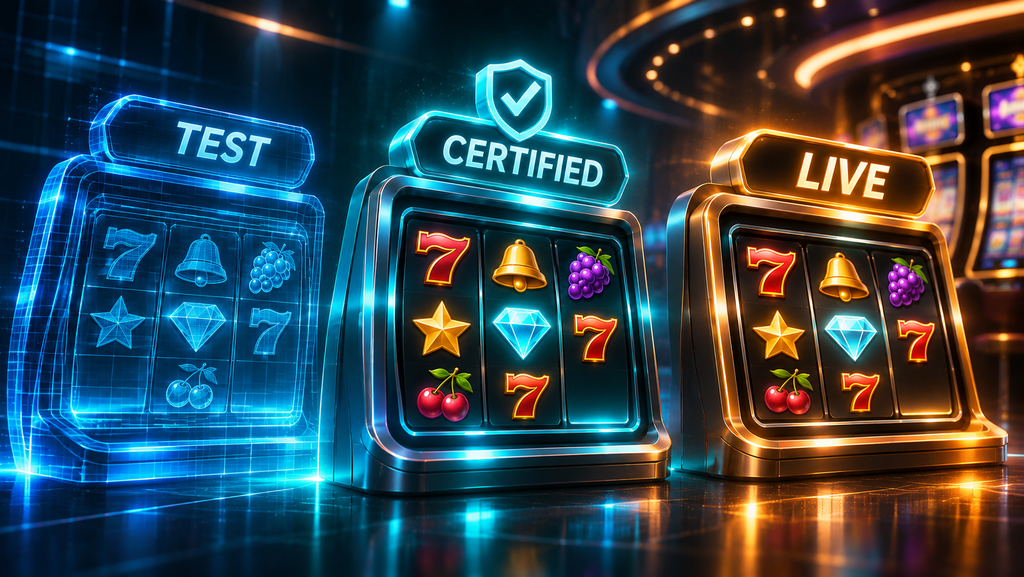
When a studio announces a release date, the title has already passed certification at that point. The game that launches is the certified version. Post-release updates that change game mechanics require recertification before the updated version can be deployed.
What Certification Does Not Cover
Certification verifies mathematical integrity and game behaviour against the submitted model. It does not:
- Guarantee that any individual player session achieves the certified RTP;
- Assess the game’s entertainment value or design quality;
- Cover the casino platform’s integration of the game, including how payouts are credited or how session data is recorded;
- Extend to promotional mechanics or bonus terms applied by the casino operator around the certified title.
The last point matters. A certified pokie’s behaviour is fixed and verified. The bonus terms applied by the operator around that pokie, wagering requirements, contribution rates and expiry conditions, are the operator’s own decisions and sit outside the game’s certification.
How Australian Players Can Verify Certification
eCOGRA and iTech Labs publish searchable game certification databases. A player who wants to verify that a specific title holds valid certification can search by game name or studio name on the laboratory’s public register.
The certification status shows the laboratory that tested the title, the RTP versions certified and the date of certification. An expired certification means the game’s current version awaits re-verification since the last significant update. Most studios maintain current certifications across all deployed titles. The public register is there for anyone who wants to check.
FAQ
Do all pokies available at Australian online casinos hold independent certification?
Licensed Australian-facing casinos operate under regulatory frameworks that require the games they offer to hold valid independent certification. Platforms licensed under MGA, Curacao or Isle of Man regulations are required to offer certified titles only. The specific laboratory that certified each title can be verified through the laboratory’s public database.
Does a higher certified RTP mean the game pays out more during a session?
Certified RTP describes long-run mathematical behaviour across billions of simulated spins, not session-level outcomes. Volatility is what determines how returns are distributed across individual spins. A high-volatility title at 97% RTP can run a long session well below that figure; a low-volatility title at 94% can produce a session above it.
Can a studio change a game’s RTP after certification?
Yes, but the changed version requires recertification before deployment. A studio that wants to update a game’s RTP configuration submits the new version to the testing laboratory for review. The updated certification covers the new configuration. Operators who switch to the updated version deploy the recertified game through their provider integration process.
How do Australian players access the bonus trigger frequency for a specific title?
Some studios publish bonus trigger frequency in the game’s paytable or rules section. Others keep it internal. Where the figure is not published, independent review sites sometimes compile it from large-sample testing. The laboratory’s certification data may also include this figure in markets where regulators require disclosure.
Does the testing process cover mobile versions of a pokie separately from the desktop version?
Most certification submissions cover all platform versions of a title: desktop, mobile browser and app. The laboratory verifies that the game behaves identically across platforms and that the RNG and payout logic are consistent regardless of the device used to play.